

Optimizing your Google Business Profile means fine-tuning your business information to stand out in local searches and on Google Maps, driving more customers to your door and boosting revenue. Many businesses struggle to get noticed in the local pack, even with great products or services. This guide offers a clear path to improving your local search presence, increasing engagement, and attracting quality leads. You’ll discover what GBP optimization truly involves and why it’s essential, the key factors that influence your local pack ranking, a detailed step-by-step process for optimization, strategies to leverage specific features for growth, best practices for monitoring performance, emerging trends to keep an eye on, and industry-specific approaches. Throughout, we’ll integrate i.Net Technologies’ deep expertise in SEO and local SEO to ensure your marketing investments yield tangible results.
Google Business Profile Optimization is the process of refining your company’s GBP listing—including your name, category, attributes, photos, reviews, and posts—to enhance your Local Search Visibility and Google Maps Ranking. By aligning your business data with what users are searching for, your profile signals relevance, authority, and proximity to Google’s algorithms, directly improving your chances of appearing in the local pack. For instance, a retailer that accurately selects its category and frequently posts about offers can outperform competitors in map results and draw more foot traffic. Optimizing your GBP listing provides three main advantages: it builds brand credibility through comprehensive information, it drives more customer actions like calls and direction requests, and it secures higher rankings in local pack results. This focus on a well-structured local presence is fundamental to effective digital marketing and strengthens your overall SEO performance.
A Google Business Profile is a free listing for local businesses that displays crucial information—like your business name, address, hours, services, and images—directly in Google Search and Maps. This tool connects user searches with actionable data by indexing your profile’s attributes within Google’s LocalBusiness schema. When someone searches for “coffee shop near me” or a specific brand, Google matches the search context (location, category, review signals) with relevant profiles and showcases them in the local pack. As users interact with your profile by viewing photos, reading reviews, or requesting directions, Google’s algorithm records these engagement metrics, which further influence your ranking. Understanding this mechanism empowers businesses to structure their GBP content for maximum discoverability and customer engagement.
Effective GBP Optimization significantly boosts Local Search Visibility by providing Google with structured, up-to-date signals that influence the local pack algorithm. Accurate category selection, recent photos, and positive review activity all contribute to the ranking criteria that determine your prominence on the map and your order in the local pack. For example, a service-area business that updates its service attributes and posting frequency can see a noticeable increase in “searches” and “views” within GBP Insights, leading to more map placements. As your local SEO improves, your Google Maps Ranking strengthens, creating a positive cycle of increased visibility, greater user engagement, and more foot traffic or calls.
These advantages combine to drive higher-quality traffic and deliver measurable ROI through enhanced local discoverability.
Yes, Google Business Profile is entirely free for all businesses to claim, verify, and manage. Google offers this LocalBusiness platform at no charge to ensure accurate business listings across Search and Maps. While paid local advertising options exist, your GBP listing itself incurs no fees. Businesses of any size can utilize GBP optimization as a core component of their Local SEO strategy without any subscription costs, making it an essential and cost-effective foundation for digital marketing and lead generation.
The primary Google Business Profile Ranking Factors are business relevance, distance, and prominence, which Google’s algorithm evaluates to determine local search results. Relevance is established through precise category and business attribute alignment; distance measures how close the business is to the searcher’s location; and prominence reflects offline reputation and online engagement, including reviews, posts, and backlinks. For instance, a café that maintains consistent citation data across various directories and receives high-quality reviews will experience improved prominence and map ranking. Optimizing these three key areas ensures a comprehensive Local SEO approach that maximizes Google Maps visibility and customer acquisition.
Research confirms that optimizing local business listings is vital for retailers aiming to increase organic traffic and improve their standing in the Local Pack.
Google Local Optimisation for Retailers: Enhancing Traffic and Local Pack Rankings
The purpose of the research presented herein is to substantiate the significance of local business optimisation for retailers within search engines to augment organic traffic; to present insights and provide practical recommendations for retailers concerning the local optimisation of their businesses on Google as an integral component of an effective marketing strategy; and to create typical, valid data micromarking (using the example of a Ukrainian retailer) that will contribute to advantageous placement within the Local Pack compared to competitors, thereby increasing organic traffic and conversion rates.
Business optimization in the digital age: Insights and recommendations, A Natorina, 2020
Selecting accurate primary and secondary categories clearly signals to Google the core services your business provides, significantly boosting Relevance for local queries. Maintaining consistent NAP (Name, Address, Phone) data across your GBP listing and external citations confirms accuracy and aids in map indexing. For example:
Precise categorisation, combined with up-to-date business hours and service details, helps Google match user searches to your profile more effectively, leading to stronger local pack performance and increased footfall or inquiries.
Online Reviews are crucial for GBP Ranking, providing both freshness and sentiment signals that Google interprets as indicators of prominence.
Actively managing your reviews and encouraging customers to leave detailed feedback not only builds valuable social proof but also elevates your profile’s prominence in local search results.
Google Posts allow you to promote Business Offers and updates directly from your profile, acting as a dynamic content channel that signals active management to Google’s algorithm. By regularly posting about weekly specials, upcoming events, or service highlights, businesses can encourage user clicks and track customer actions.
Consistently scheduled Google Posts keep your content fresh, enhance local search relevance, and increase click-through rates directly from the local pack.
Local citation consistency strengthens the authority of your Business Listings and overall Local SEO by ensuring that your business details are identical across directories, review sites, and social media platforms. Consistent citations validate the accuracy of your profile, prevent customer confusion, and increase Google’s confidence in your data. When your business name, address, and phone number match exactly across all sources, Google attributes greater prominence to your GBP listing, significantly improving your chances of appearing in local pack results.
Maintaining consistent business information across various online platforms is a fundamental element of effective local search engine optimization.
The Definitive Guide to Local Search Ranking Factors
The definitive guide to local search ranking factors
The definitive guide to local search ranking factors, 2018
GBP verification is the process Google uses to confirm your business’s legitimacy, typically through a mailed postcard with a PIN or phone verification. A verified profile gains full access to essential features like Google Posts and insights, and it signals trustworthiness to Google’s algorithm. Verified listings rank more reliably in local searches and often secure priority placement in the local pack compared to unverified profiles.
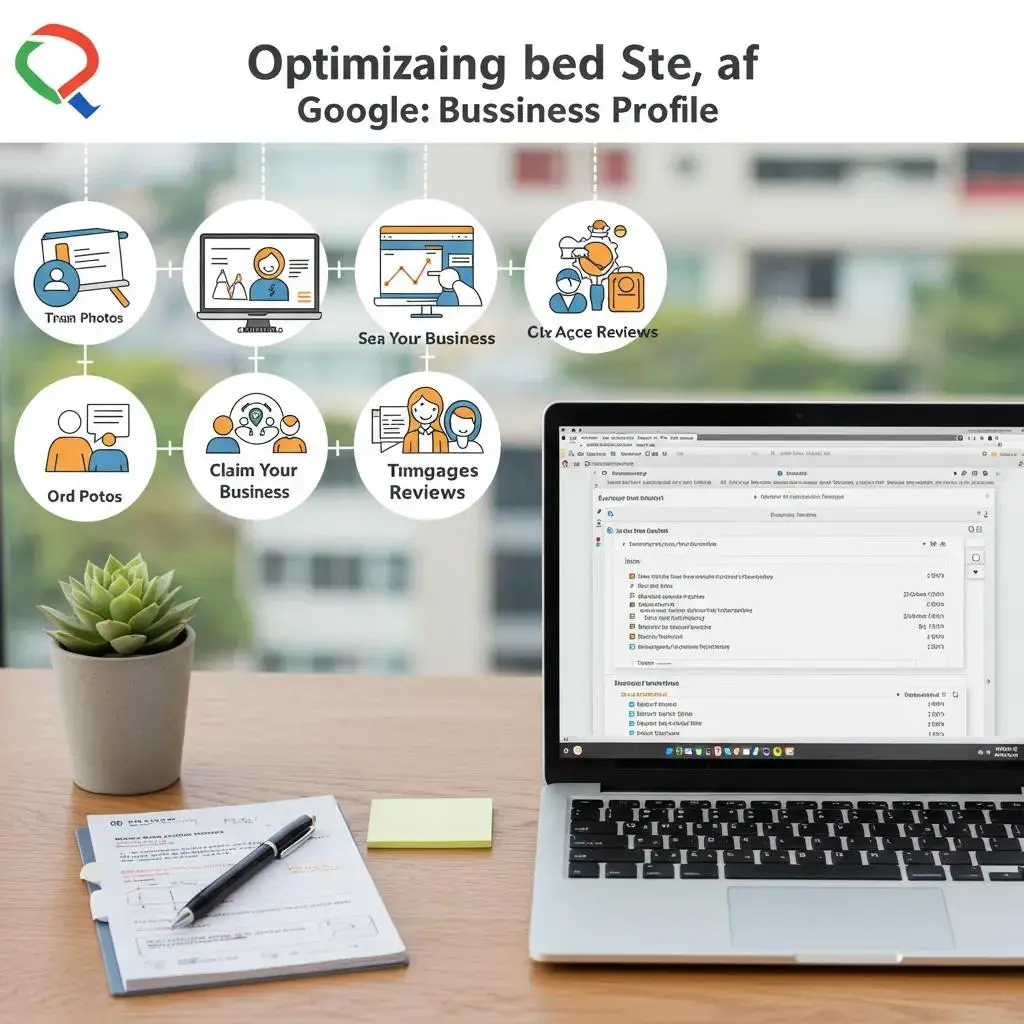
Optimizing your Google Business Profile involves a structured workflow designed to ensure completeness, accuracy, and ongoing engagement. This methodical approach aligns with Google’s priorities for local relevance and prominence, ultimately leading to better Local Search Visibility and more customer actions.
Begin by searching for your business name on Google Maps or within the Business Profile dashboard and selecting “Claim this business.” Next, complete the verification process by choosing your preferred method: postcard, phone, or email verification. Verifying your profile confirms your ownership and unlocks advanced features such as Google Posts and Q&A management.
Ensure NAP consistency by matching your website’s contact details precisely within your profile. Update your service offerings and operating hours promptly, whether seasonally or as changes occur. Utilize rich descriptions and attribute fields (e.g., “women-owned,” “delivery available”) to enhance relevance for specific search queries.
Start by uploading high-resolution images that showcase your location, products, team, and services. Adhere to Google’s photo guidelines by using images that are at least 720×720 pixels, with clear, descriptive file names (e.g., gbp-front-signage.jpg) and appropriate ALT text, such as “front signage of local bakery.” Optimized photos significantly increase engagement and demonstrate active profile management.
Monitor new reviews daily and craft personalized, timely responses that express gratitude and address any concerns. Use your review replies as an opportunity to incorporate relevant keywords and reinforce your service attributes. This proactive review management demonstrates responsiveness, fosters customer loyalty, and improves your profile’s prominence based on review-driven ranking factors.
Develop a weekly posting schedule that strategically alternates between offers, events, and new product highlights. Use action-oriented titles and clear call-to-action buttons like “Book Now,” “Order Online,” or “Learn More.” Scheduling your posts in advance through the Business Profile interface ensures consistent content freshness.
Actively monitor the Q&A section by setting up alerts for new questions and responding promptly with clear, informative answers. If certain questions are frequently asked, consider adding them proactively with detailed answers to manage customer expectations and maintain control over your profile’s FAQ content.
Google Business Profile offers advanced features that go beyond basic listing information, providing powerful growth opportunities for local businesses to capture demand and enhance customer engagement.
Google Posts are concise, time-sensitive content snippets that enable businesses to highlight promotions, events, or news directly within their profile. By crafting compelling posts with engaging visuals and clear calls to action, businesses can stimulate immediate customer responses and track click-through metrics within Insights.
Google Maps Insights provides valuable data on search queries, direction requests, and customer actions related to your profile. Analyze top search terms to refine your category choices and service descriptions. Track peak engagement times to schedule your posts when user interest is highest, and optimize photo uploads to showcase popular products or services.
Multi-location management allows businesses with multiple physical locations to administer their profiles efficiently at scale. Utilize the bulk location import tool to map each site’s unique attributes and ensure consistent NAP data across all listings. Consolidated analytics across locations help identify underperforming outlets and enable the application of targeted optimization tactics.
Service-area businesses can benefit significantly by hiding their physical address and instead defining a specific service coverage radius. This approach prioritizes distance relevance for businesses offering home-based or mobile services. By clearly specifying service zones, these businesses can appear in relevant local searches without causing confusion about a street-level location.
Access your Business Profile dashboard to review key metrics such as search views, profile views, direction requests, and calls. Use this data to benchmark your progress over time and correlate marketing campaigns with spikes in customer actions, allowing you to refine your strategies for sustained growth.
Achieving sustained GBP performance requires consistent maintenance, diligent performance monitoring, and adaptability to algorithm changes. An ongoing management plan ensures your continued local prominence and helps you leverage new features as they become available.
Key performance indicators to track include total profile views, search queries driving impressions, customer actions (calls, direction requests, website clicks), photo views, and post interactions. Monitoring these metrics over time reveals the impact of your optimization efforts and informs strategic adjustments.
If your profile is suspended, first thoroughly review Google’s policy guidelines to identify any potential violations, such as miscategorized listings or prohibited content. Submit a reinstatement request with accurate information and any necessary documentation. Addressing the root causes of the suspension is crucial to prevent future issues and preserve your profile’s integrity.
Update textual content and service attributes quarterly, or whenever your offerings change. Refresh your photos monthly to reflect new products, team members, or seasonal decor. Frequent updates signal to Google that your business is active, reinforcing freshness signals that impact ranking factors.
Specialized tools like BrightLocal and Semrush offer capabilities for local pack tracking, citation audits, and competitor monitoring, helping you maintain data consistency. Google Search Console can reveal search queries leading to your local pages, providing additional valuable context for your GBP optimization strategies.
Navigating the complexities of local search engine optimization presents unique challenges for businesses aiming to enhance their online visibility.
Challenges in Local Search Engine Optimisation Strategies
Are you local? The challenges of local search engine optimisation strategies
Are you local?
The challenges of local search engine optimisation strategies, B Keegan, 2019
Subscribe to official Google Business Profile help announcements and follow industry publications like Search Engine Journal or Moz for insights into emerging best practices. Regularly auditing your profile ensures it remains aligned with the latest features and algorithm updates.
Anticipating future trends is key to ensuring your GBP strategies remain effective amidst evolving algorithms and consumer behaviors. Emerging innovations are actively reshaping local search dynamics and profile optimization.
AI-driven voice assistants prioritize concise, structured local data when responding to queries. Optimizing your business descriptions with natural language phrases and question-answer pairs positions your profile for voice search featured answers and increases its prominence in spoken results.
Hyper-local targeting focuses on very specific micro-areas within a city or neighborhood by integrating location-specific keywords and local landmarks into your profile attributes. This practice significantly boosts relevance for ultra-local searches and can help businesses differentiate themselves in highly competitive markets.
Maintain flexible optimization workflows that allow for rapid profile adjustments based on Google’s policy announcements. Regularly audit your categories, attributes, and review responses to ensure alignment with evolving guidelines and prevent potential ranking volatility.
As competition in local search intensifies, high-quality reviews featuring detailed feedback serve as critical prominence signals. Encouraging customers to describe specific services and outcomes not only enhances trust but also embeds relevant keywords that support semantic relevance in GBP ranking.
Tailoring GBP optimization tactics to industry-specific needs maximizes local relevance and customer attraction for diverse business models.
Retail and hospitality profiles benefit greatly from showcasing high-quality images of storefronts, menus, or products. Utilize the “products” and “menus” attributes to list your offerings, and publish seasonal promotions via Google Posts to drive immediate bookings or visits.
Service-area businesses should precisely define their coverage radii and utilize attributes like appointment booking links. Highlight specific service types (e.g., plumbing, landscaping) in the description to match local queries and encourage calls or online scheduling.
Professional services—such as legal or financial advisors—should leverage the “services” section to detail consultation types, specializations, and pricing ranges. Actively soliciting client feedback through reviews that include service-specific keywords builds prominence in professional local searches.
For multi-location chains, use the bulk import spreadsheet to synchronize NAP data and ensure consistent branding across all outlets. Segment profiles by region or service type and compare performance metrics across locations to identify optimization priorities and allocate resources strategically.
Optimized Google Business Profiles are essential for driving local discovery, engagement, and revenue growth by aligning business data with consumer search behavior. By following this structured approach and leveraging advanced features, businesses can secure lasting prominence in local pack results. To elevate your local SEO and GBP strategy, adopt these tactics or consult the dedicated Local SEO experts at i.Net Technologies via inetonline.com for a customized roadmap to measurable ROI and sustained local presence.